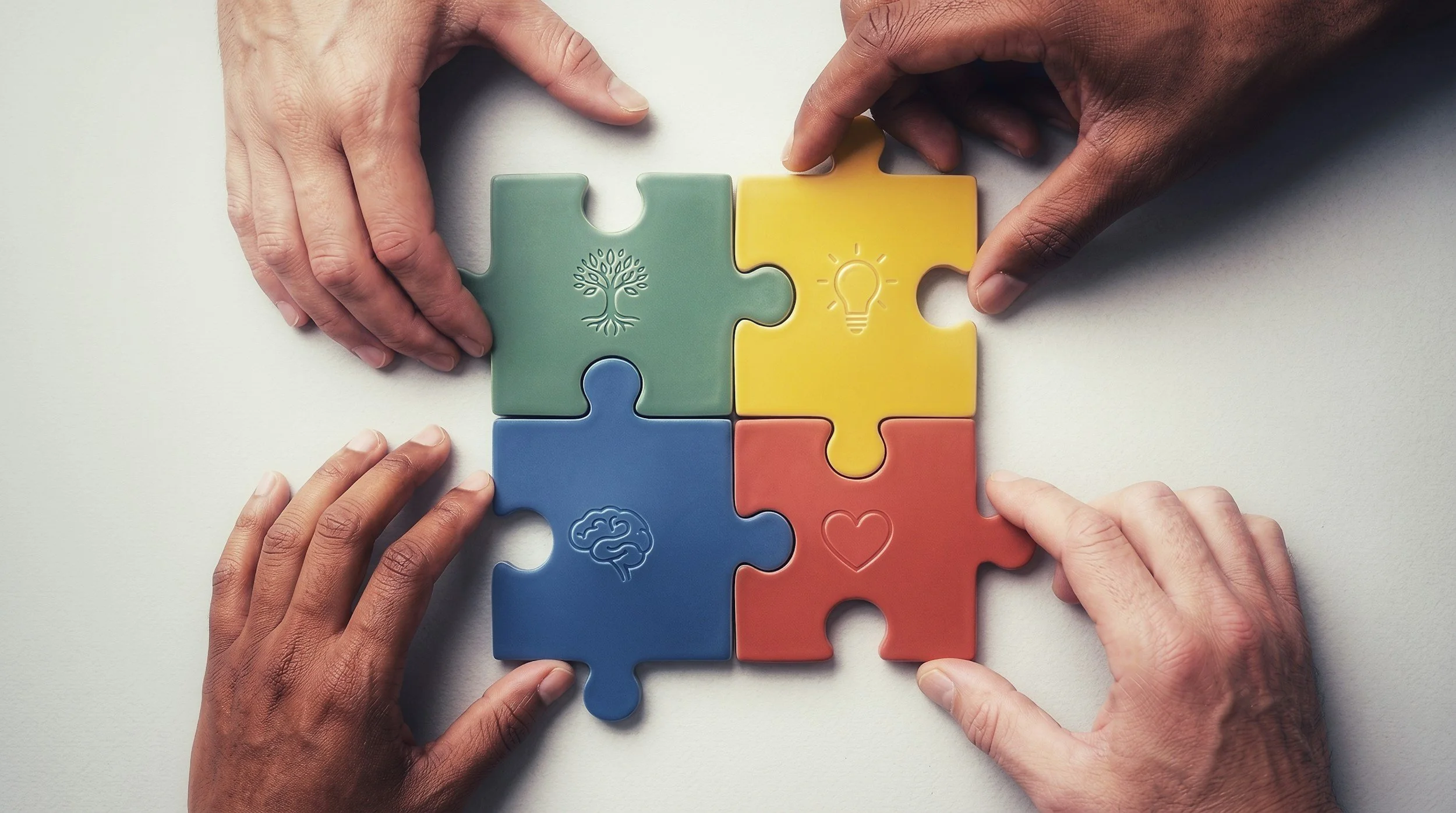
Autism spectrum disorders (ASD) are a group of diverse conditions including difficulties with social interaction/communication and focus/switching tasks as well unusual behavior and reactions. However, autism is not a psychological or mental, but rather a neurological disorder and is not completely curable. Depending on severity, autism can significantly impair affected one’s lives, sometimes requiring life-long support.
Core characteristics
For specialists, to diagnose autism, there are specific core traits that are differences to non-autistic people.
Communication: autistic people have different ways of communication such as different facial expressions, body language and interpretations of words. Some people with autism are limited in speech and may communicate in augmentative and alternative communication (AAC: e.g writing, sign language or tech-tools).
Behaviors and interests (RRBI’s: restricted and repetitive behaviors and interests): an intense preference (e.g. hobby, entertainment figure/series, interest), repetition of movements/behaviors (e.g. hand flapping, hair twirling, spinning around), routine/order/predictability (same routines, knowing all details, same rights for everyone)
Sensory processing: much more/less sensitive to main senses (sight, sound, touch, smell, taste) and other senses (balance, movement, internal states). Sensory processes are related to RRBI’s as they cause reactions of sensors.
Causes
As many mental disorders, several environmental and genetic factors can increase autism development:
Genetic predispositions
Advanced parental age
Severe birth complications
Low birth weight
Prematurity
Discrimination & Masking
People with autism often face discrimination and stigma due to their spectrum, limiting their opportunities in education, career and social life. Additionally, some mental disorder including anxiety, depression or ADHD (hyperactivity/attention-deficit disorder) occur more often with people with autism, often due to the exhausting condition of masking”. Masking is the act of hiding, adapting and/or hanging certain behavior to not attract attention, “fit in”, avoid stigma and/or be accepted.
Treatments
Autism is a neurodevelopmental condition and is not curable, but therapies can enhance the patient’s life by teaching coping skills. Since autism has a broad range of symptoms, treatment options vary depending on symptoms. These include:
Behavior analysis (ABA): positive reinforcement of certain behaviors
Speech-language therapy: communication skills, use of AAC (defined above)
Occupational and physical therapy: daily task skills (daily routines/event) and physical skills (balance, motor skills)
Sources
World Health Organization, (17.09.2025), ‘Autism’, World Health Organization
National Autistic Society, (…), ‘What is Autism?’ National Autistic Society
National Autistic Society, (…), ‘Masking’, National Autistic Society
Cleveland Clinic, (10.01.2024), “Autism Therapies”, Cleveland Clinic